THE TRADITION
Ask About the Tradition
Plain-English guides to Hindu practices, festivals, and temple etiquette — written to help first-time visitors and curious friends feel at home.
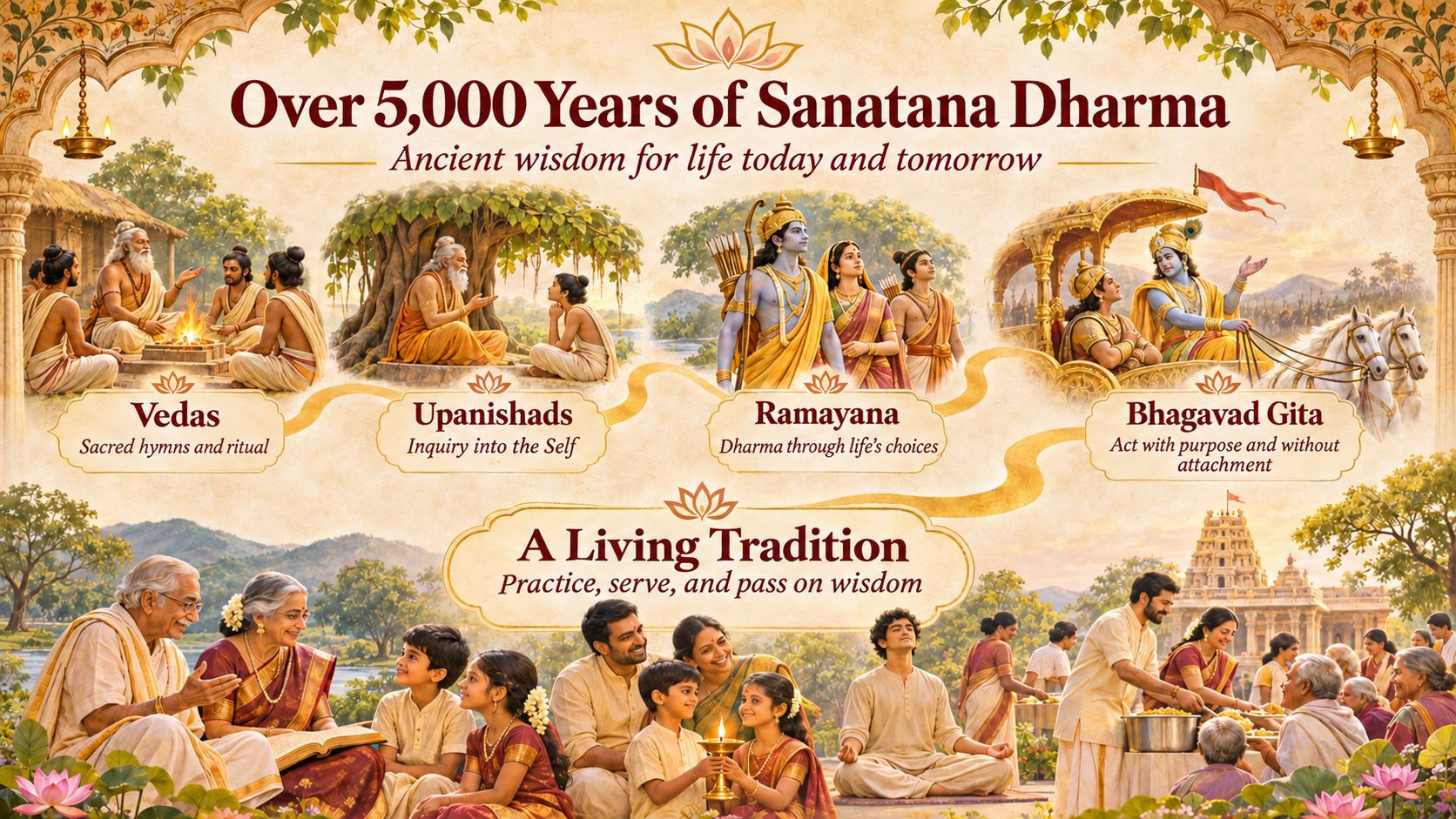
Over 5,000 Years of Sanatana Dharma
Dharma: How do I know what to do?
Dharma is a Sanskrit word with several meanings. In Hindu traditions, it can refer to ethical conduct, the responsibilities that come with a role, or the order that sustains life. In everyday decisions, dharma invites a practical question: What do I owe to the people affected by my choice?
The Vedas: Learning by listening
The Vedas are among the oldest sacred texts in Hindu traditions. The four collections are the Rig, Sama, Yajur, and Atharva Vedas. They include hymns and material used in ritual. Teachers have passed down Vedic chants by voice, carefully preserving their sounds and accents.
The Upanishads: Asking who you are
The Upanishads are texts within the Vedic tradition. Many use conversations and stories to explore the Self, often called atman, and ultimate reality, often called Brahman. Hindu schools interpret the relationship between them in different ways.
The Ramayana: Making hard choices
The Ramayana is an epic told in many languages and versions. In a well-known episode, Rama goes into exile after his father is bound by a promise. Sita and Lakshmana accompany him. Their choices invite readers to think about dharma, which can involve duty, ethical conduct, and care for others.
The Bhagavad Gita: Focus on your actions
The Bhagavad Gita is a dialogue in the Mahabharata. Arjuna faces a painful decision on a battlefield and asks Krishna for guidance. In verse 2.47, Krishna teaches that we are responsible for our actions and cannot claim control over their fruits. The verse also cautions against turning away from action.
What is aarti?
Aarti (also spelled arati or aarthi) is a devotional ritual in which a flame — typically a small ghee lamp or camphor — is waved in a clockwise motion before a deity's image or murti while prayers and hymns are sung.
What does seva mean?
Seva (Sanskrit: सेवा) means "service" — specifically, selfless service offered without expectation of reward. In Hindu philosophy, seva is considered both a spiritual practice and a form of devotion.
What should I expect on my first temple visit?
Visiting a Hindu temple for the first time is a welcoming experience. Here's what to know before you go.
What is prasad?
Prasad (Sanskrit: प्रसाद, also spelled prasadam or prashad) is food that has been offered to a deity during puja and is then returned to the worshippers as a divine blessing.
What is Diwali?
Diwali (Sanskrit: Deepavali — "row of lamps") is one of the most widely celebrated Hindu festivals. It typically falls in October or November on the new moon of the month of Kartik.
What is kirtan?
Kirtan (Sanskrit: कीर्तन, kīrtana) is devotional call-and-response chanting, typically of divine names or hymns. It is one of the nine forms of bhakti (devotion) described in the Bhagavata Purana.